
Publication in Journals
- Richard Merrill's writing has been published in Voices: The Journal of the American Academy of Psychotherapists, where he wrote about his wife's handwork coaching process called Weaving a Life in two articles commissioned by the Journal, co-authored by Susan Barrett Merrill.
- Merrill's study of music for chronic pain was published in Biology and Life Sciences Forum in 2021.
- Merrill presented his research at The 1st International Electronic Conference on Biomedicine, June 1-26, 2021.
- Richard Merrill's research on music and chronic pain has been cited in several articles.
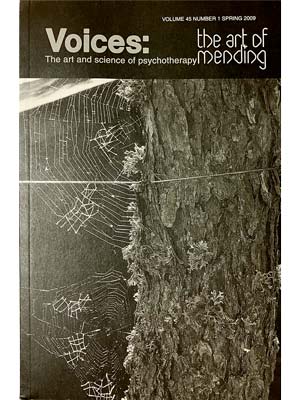
Voices:
The Journal of the American Academy of Psychotherapists
Vol 45, Issue 1
Article on handwork as mending, with case studies of the process called Weaving a Life that was developed by Susan Barrett Merrill, co-author.
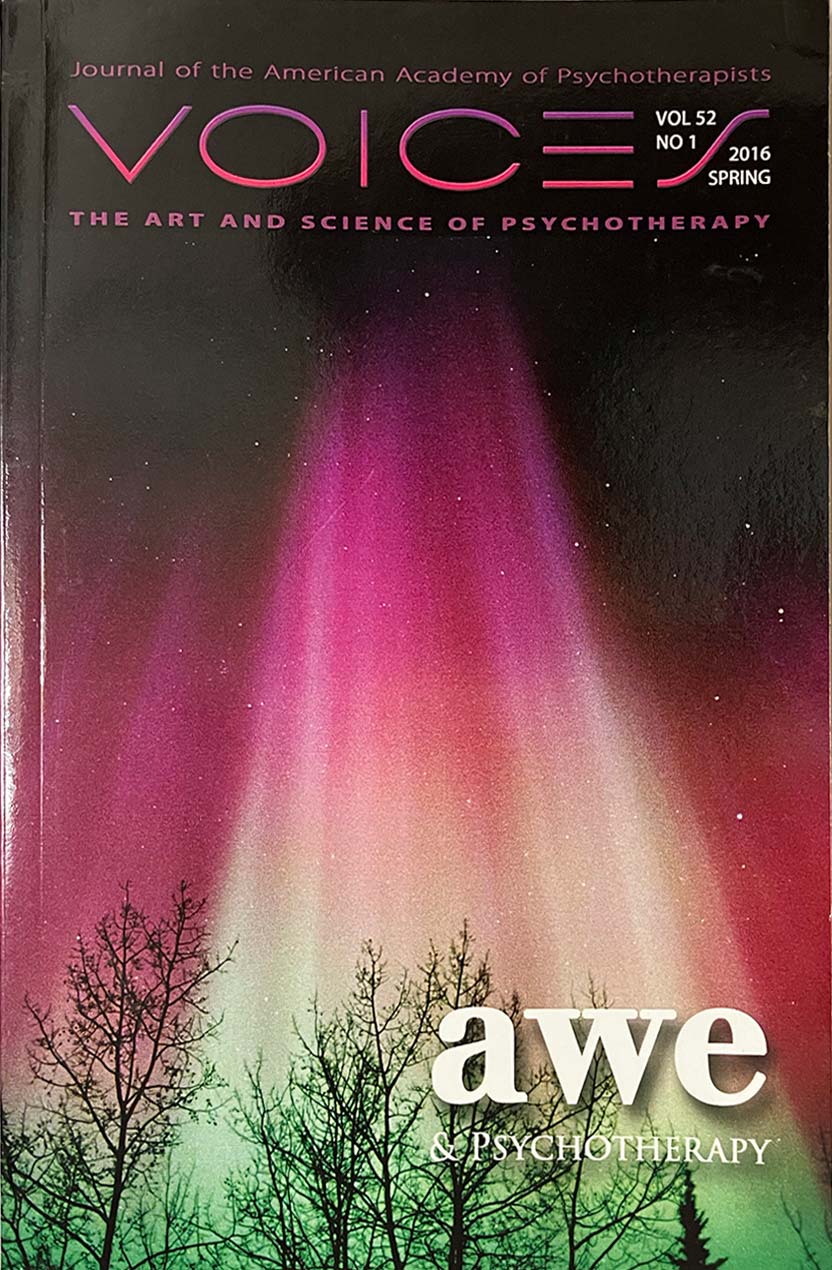
Voices:
The Journal of the American Academy of Psychotherapists
Vol 52, issue 1
Article called "The Space Within", a description of the Weaving a Life process developed by Susan Barrett Merrill, co-author.

Richard Merrill's study was completed in 2019, accepted by the journal in 2020, and Merrill presented his study at The 1st International Electronic Conference on Biomedicine, 2021.
Rhythmically-enhanced music as analgesic for chronic pain: a pilot non-controlled observational study
https://doi.org/10.3390/ECB2021-10266
Richard Merrill (research lead, author of study) and
Mariam Taher Amin (data analysis)
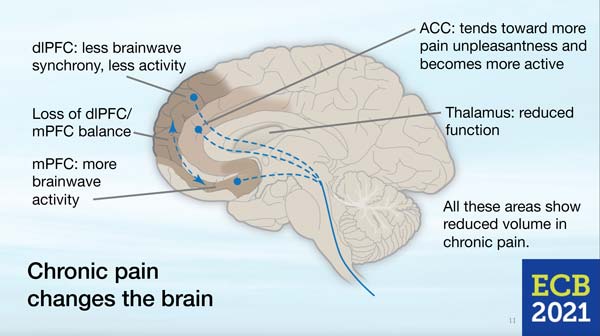
Merrill recruited participants in a study of chronic pain response to brainwave frequencies that matched healthy frequencies of the brain's pain processing network by embedding the frequencies in music. Participants were provided with an app with a catalog of almost 30 half-hour selections in many different genres, and listened to two music selections each day for three months.
Merrill recorded data on pain scores (1-10) and medication dosage (translated to morphine equivalents). By the end of the study period, pain scores were reduced by an average of 27% (p=<0.05), and medication dosages were reduced by 60% (p=<0.05), a figure requiring further study. Reduction in medication dosage was the primary and most significant outcome, suggesting followup studies at clinical laboratories to determine the value of this type of music for reduction in opioid use and possible treatment of opioid use disorder.
Rhythmically-enhanced music as analgesic for chronic pain cited by:
- Verma, A., Sambath, R.D., Asthana, M.K. (2025). Music Genre Preference of Non-musicians. In: Das, S., Akram, W., Khanzode, V., Iqbal, R. (eds) Human-Centered Digitalization, Volume 3. HWWE ACED BRICS 2023 2023 2023. Design Science and Innovation. Springer, Singapore. https://doi.org/10.1007/978-981-96-4383-7_21, cited in Reference 53.
- Lennart Sbach, Der Einfluss von funktionalem Sound am Arbeitsplatz (The influence of functional sound in the workplace), 2023, cited inline and in References page XI
- Jennifer Nicole Leavitt, Comparative Efficacy Of Combined Versus Singular Auditory Alphatheta Brainwave Entrainment And Hypnotherapy Modalities In Chronic Pain Management, 2025 Dissertation, Liberty University, Lynchburg, VA, cited inline and in References on page 211.
- Jumraini Tammasse, Doctor of Physical Therapy, Stroke Thrombolysis, Hasanuddin University Department of Neurology.